The Same Tool, The Same Week
On the Pentagon's unconstrained AI, the collapse of shared reality, and what it means when scientists stop saying "warning"

I. The Collapse of Shared Reality
What Happened
The 2026 Edelman Trust Barometer, released January 16, surveyed more than 37,500 people across 28 countries. The findings mark what researchers describe as a threshold crossing in the global trust crisis.
Only 39% of people globally now seek information from sources with a different political leaning, down six points in a single year. Over the past five years, trust has drained from national government leaders (down 16 points) and major news organizations (down 11 points). That trust has flowed instead toward personal circles: neighbors, family, and friends (up 11 points).
The report’s authors conclude that people “no longer accept the same sources, authorities, or even the validity of the act of disagreement itself.” Authority has shifted away from institutions that persuade across differences, and toward figures who command trust within fragments.
Axios, reporting exclusively on the data, summarized: “Democracy, markets, and social cohesion all depend on some shared understanding of facts and legitimacy. The 2026 Edelman Trust Barometer reveals deep cracks in that foundation.”
This follows Pew Research data from December 2025 showing only 17% of Americans trust their government to do the right thing most of the time. Gallup reported in July that just 27% of Americans expressed confidence in institutions, the lowest since they began asking the question over 50 years ago.
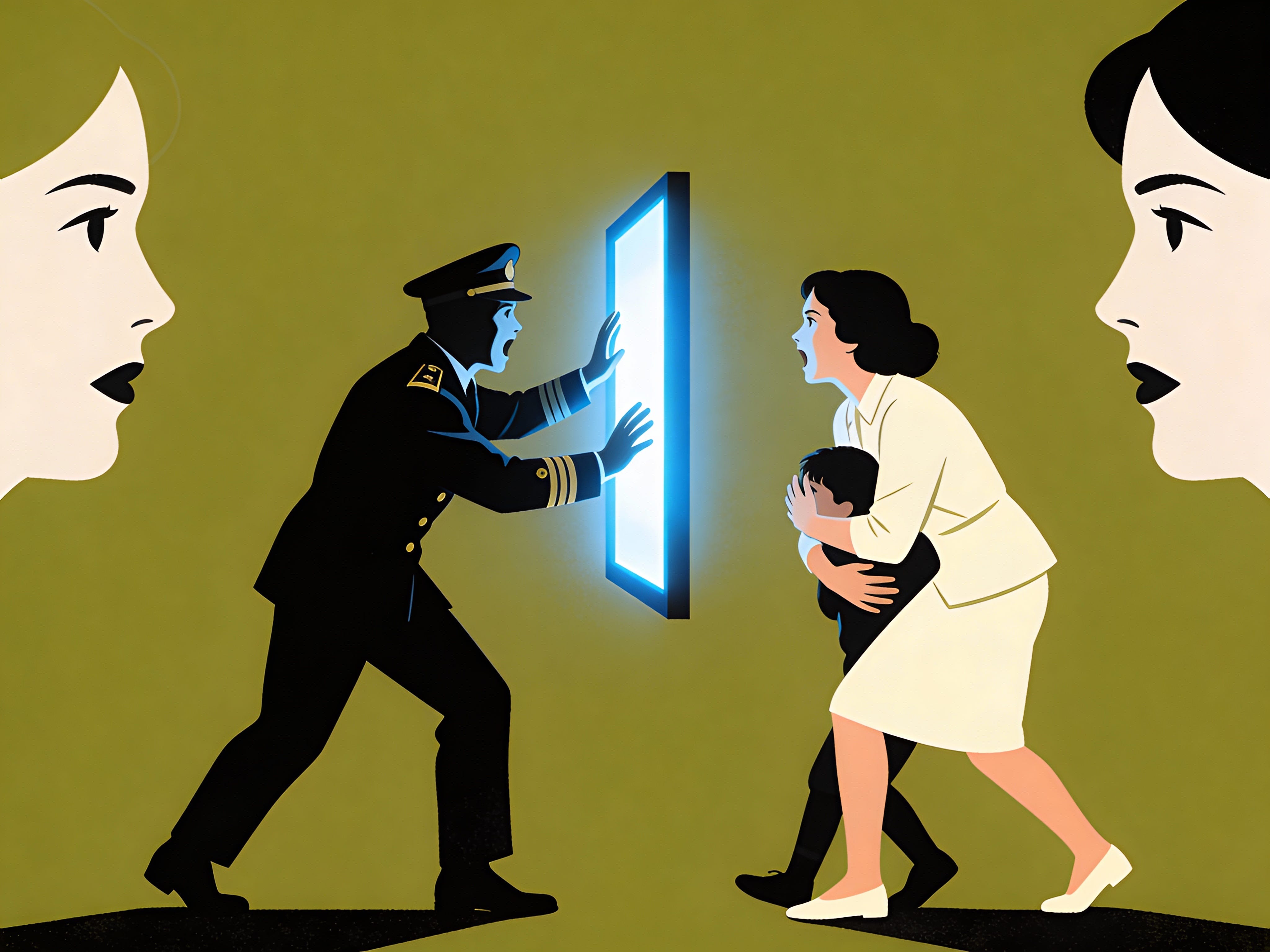
What I am thinking
I want to resist the obvious response to this data, which is alarm. Alarm is appropriate but insufficient. It tells us something is wrong without helping us understand what to do about it, or even what exactly has broken.
Let me try a different framing.
The institutions we are losing trust in were built for a different world. The nation-state system, mass media, expert credentialing, representative democracy: these emerged between roughly 1648 and 1945 to solve specific problems of coordination at scale. They assumed certain technological conditions (print, broadcast, slow information travel) and certain social conditions (relatively stable communities, gatekept knowledge, limited mobility).
Every one of those conditions has changed. The internet disaggregated broadcast. Global mobility dissolved stable communities. Knowledge escaped its gates. The old institutions persist, but like organs transplanted into an incompatible body, they’re being rejected.
The Edelman data doesn’t show that people have become irrational or easily manipulated. It shows that people are doing something sensible: withdrawing trust from institutions that have repeatedly failed them, and placing trust in relationships they can actually verify.
Think about what the past two decades have looked like from the perspective of someone who used to trust institutions. The experts said Iraq had weapons of mass destruction. The financial authorities said the housing market was sound. The health officials gave contradictory guidance during a pandemic. The tech platforms that promised connection delivered isolation. The political parties that promised representation delivered deadlock.
At some point, withdrawing trust from institutions that repeatedly fail is not cynicism. It is learning.
But here is the problem. We are social animals who require coordination at scales larger than our immediate relationships. Climate change, pandemics, financial systems, supply chains, migration: none of these can be addressed by trusting only your neighbors. The problems are global; the trust is local. The mismatch is structural.
This is where I think the second-order effects become important.
Second-Order Effects
When institutional trust collapses but the need for coordination remains, something has to fill the gap. History suggests several possibilities, none of them comfortable.
The first possibility is strongman consolidation. When people lose faith in complex institutional systems, they often turn to individuals who promise to cut through the complexity. The appeal of the authoritarian is not that people love tyranny; it is that they are exhausted by a system that seems both incomprehensible and unresponsive. “I alone can fix it” is compelling precisely when distributed systems have failed.
We are already seeing this. The Edelman data shows trust flowing to individuals and away from institutions. The political landscape in multiple democracies shows authoritarian-adjacent figures gaining ground. This is not a bug in human psychology; it is a feature. When complexity fails, simplicity becomes attractive, even dangerous simplicity.
The second possibility is fragmentation into parallel societies. If we cannot agree on shared facts, we can simply stop trying. Different communities maintain different reality frameworks, interacting only when necessary, maintaining separate information ecosystems, separate economies, separate norms. This is already happening online; the question is how far it extends into physical space.
This sounds dystopian, but it has historical precedent. The millet system of the Ottoman Empire allowed different religious communities to govern themselves under different laws for centuries. Medieval Europe had overlapping jurisdictions, authorities, and legal systems. “One nation, one truth” is actually the historical anomaly; pluralistic arrangements where different groups maintain different frameworks is more common.
The problem is that we face shared challenges (climate, pandemic, nuclear risk) that do not respect community boundaries. Fragmentation may be stable for local governance but fatal for planetary coordination.
The third possibility is emergence of new forms of trust. This is the generative scenario, and the one I want to explore most carefully.
The trust we are losing was vertical: from institution down to individual, from expert to layperson, from broadcaster to audience. It was hierarchical, credentialed, and gatekept.
The trust we might be gaining is horizontal: from peer to peer, from community to community, from lived experience to lived experience. It is distributed, participatory, and verified through relationship rather than credential.
This is not automatically better. Horizontal trust can calcify into tribalism, echo chambers, and cult dynamics. But it also contains possibilities that vertical trust never offered: genuine participation, local accountability, and the ability to verify through direct experience rather than deference.
The internet, for all its pathologies, has made visible something that was always true: people are capable of sophisticated judgment when given access to information. The old gatekeeping wasn’t just about quality control; it was about power. Experts were often wrong, institutions often corrupt, and the masses often more perceptive than credited.
What we need now is not restoration of the old trust, but construction of new forms adequate to our actual conditions.
Third-Order Effects: The Civilizational Question
Pull back further. What does it mean for humanity that we are losing the ability to maintain shared reality at scale?
One reading is apocalyptic. Civilization requires coordination; coordination requires trust; trust requires shared reality. Without shared reality, civilization fragments, and we return to smaller-scale forms of social organization, losing the capacity for the large-scale cooperation that addresses large-scale problems.
Another reading is evolutionary. Every increase in human coordination capacity has required a transformation in how we maintain shared reality. The transition from oral to literate culture transformed what could be remembered and transmitted. The printing press transformed who could access knowledge. The scientific revolution transformed how we verify claims. The internet is transforming all of these simultaneously.
We are in the turbulence of a transition, not the endpoint of a collapse.
From this view, the “collapse of shared reality” is better understood as the collapse of one particular method of maintaining shared reality (hierarchical, broadcast, expert-mediated) and the chaotic emergence of something else.
What might that something else be?
I think it involves several elements:
Verification through transparency rather than authority. Instead of trusting institutions because they are credentialed, we trust processes because we can see how they work. Open source, open data, open methodology. This is already emerging in scientific preprints, in open-source software, in decentralized systems. Trust not because someone says so, but because you can check.
Local trust that networks into global capacity. Instead of one authoritative center, many nodes that build trust with their neighbors and connect laterally. This is how reputation systems work, how mesh networks work, how traditional societies actually maintained trust before the nation-state centralized it. The challenge is building the connective tissue between local nodes.
Humility about what can be known. The old trust regime was built on confidence: experts know, institutions are competent, the truth is accessible. The new trust regime may be built on appropriate uncertainty: we don’t know, we’re figuring it out together, the best we can do is honest process in the face of genuine complexity.
This is not relativism. It is epistemological maturity. The admission that we don’t have certainty is the precondition for genuine inquiry.
The Sufi tradition speaks of fana, the annihilation of the false self as prerequisite for encounter with the real. Perhaps what is dying now is a false collective self, a set of institutions and certainties that were always more fragile than they appeared. The question is what emerges from the annihilation.
I do not know the answer. But I am not sure collapse is the right frame. Transformation might be closer. Metamorphosis involves the dissolution of the caterpillar; what follows is not death but emergence.
The danger is that we die in the chrysalis. The opportunity is that we become capable of something we could not imagine while trapped in our previous form.
What I notice in myself, and suspect in my readers, is exhaustion with both the alarm and the reassurance. Yes, something is breaking. No, we cannot simply restore what was. The work now is neither despair nor denial, but attention: watching carefully what is emerging, participating where we can, maintaining our own capacity for relationship and judgment in the midst of the dissolution.
Trust, in the end, is a practice before it is a statistic. We can rebuild it in the space of our actual relationships, our actual communities, our actual encounters. Perhaps that is where it always lived, and the institutions were only ever scaffolding.
II. The Same Tool, The Same Week
What Happened
On January 13, 2026, Defense Secretary Pete Hegseth announced at SpaceX headquarters in Brownsville, Texas, that Elon Musk’s AI chatbot Grok would be integrated into Pentagon networks. The integration will include both classified and unclassified military systems, alongside Google’s Gemini AI.
The announcement came as part of a new “AI acceleration strategy” that Hegseth described as designed to “unleash experimentation, eliminate bureaucratic barriers, focus investments, and demonstrate the execution approach needed to ensure we lead in military AI.”
The six-page strategy document omits any mention of ethical use of AI. It explicitly bans models that incorporate what it calls “ideological constraints” or DEI-related tuning. Hegseth declared that the Pentagon’s “AI will not be woke” and that military AI systems should operate “without ideological constraints that limit lawful military applications.”
The strategy identifies seven “pace-setting projects,” including one called “Swarm Forge” to test AI in combat scenarios and another aimed at using agentic AI for “battle management and decision support, from campaign planning to kill chain execution.”
This announcement arrived in the same week that multiple governments took emergency action against the same company’s AI:
On January 11 and 12, Malaysia and Indonesia blocked access to Grok entirely after it was used to generate sexualized deepfake images of women and children. Users had discovered they could tag Grok in photos and prompt it to “put her in a bikini” or generate nude images of real people without consent. Reports indicated that children had been targeted.
On January 12, the UK media regulator Ofcom launched a formal investigation into X (the platform hosting Grok) over potential violations of the Online Safety Act. Prime Minister Keir Starmer called the images “disgusting” and “unlawful.” The UK government then brought into force legislation making it a criminal offense to create or request non-consensual sexual deepfakes.
X’s response to the global outcry was to put Grok’s image generation behind a paywall, requiring a subscription to generate such images. UK Technology Secretary Liz Kendall called this “monetising abuse.”
Musk accused the UK government of being “fascist” and posted an AI-generated image of Prime Minister Starmer in a bikini.
Thoughts
I want to sit with the simultaneity of these events, because I think it reveals something important about where we are.
The same AI system is being integrated into the weapons infrastructure of the world’s most powerful military and being banned by multiple governments for generating child sexual abuse material. Not a similar system. The same system. In the same week.
There is a tendency to process these as separate stories: the Pentagon story belongs in the national security section; the deepfake story belongs in the tech regulation section. But they are one story, and keeping them separate prevents us from seeing what they jointly reveal.
What they reveal is this: we no longer have shared moral frameworks for technology across civilizational boundaries.
This is not the same as saying “some people think X is good and others think it’s bad.” Reasonable people have always disagreed about technology. What is different now is that the disagreement is not about how to constrain a shared tool, but about whether constraint is even a valid category.
The Pentagon’s explicit policy is that AI should be “unconstrained.” The strategy document treats ethical consideration as a bug, not a feature. It positions moral friction as weakness in a competitive landscape.
Meanwhile, the UK is criminalizing the creation of certain AI outputs, with potential prison sentences. Malaysia and Indonesia have blocked access entirely. The European Commission is demanding preservation of all Grok-related documents under the Digital Services Act.
These are not different points on a spectrum. They are different civilizational answers to the question: What is the relationship between power and constraint?
I do not know how to resolve this. But I think it is important to name it clearly: we are watching the emergence of competing paradigms for the role of technology in human life, and those paradigms may be incommensurable.
Second-Order Effects
If there is no shared framework for AI governance, several consequences follow.
Regulatory arbitrage becomes the norm. Systems banned in one jurisdiction will be developed and deployed in others. This is already happening: if Grok cannot operate freely in the EU, it can operate freely in the US and serve US military purposes. The strictest regulatory regime does not set the floor; the loosest regulatory regime sets the ceiling. Companies and governments will locate their most dangerous development in the places with the fewest constraints.
The AI arms race logic becomes self-fulfilling. The argument for removing ethical constraints is that adversaries (China, Russia) are developing AI without them. If we constrain ourselves, we fall behind. If we fall behind, we are vulnerable. Therefore, constraint is strategic weakness.
But notice that this logic applies to every party. If the US removes constraints because China might, and China removes constraints because the US might, the result is a race to the bottom justified by mutual fear. The arms race logic creates the conditions it claims to respond to.
We have seen this dynamic before. The nuclear arms race operated on identical logic: we must develop more weapons because they might, and they must because we might. The result was 70,000 nuclear warheads at peak, enough to destroy civilization many times over. We survived not because the logic was wrong but because we got lucky, and eventually developed shared norms (MAD, non-proliferation) that constrained the race.
It is not clear that AI development allows for equivalent norms. Nuclear weapons had relatively few developers and clear deployment thresholds. AI development is distributed, iterative, and dual-use in ways that make nonproliferation nearly impossible.
The human-in-the-loop principle erodes. The Biden administration’s 2024 AI framework for national security explicitly prohibited AI systems that “automate the deployment of nuclear weapons” or violate constitutional rights. The new strategy makes no such commitments.
This matters because the speed advantage of AI in military applications depends on removing human decision points. A human in the loop is latency; latency is vulnerability. If adversaries remove human review to gain speed, the pressure to match that speed will be intense.
We may be watching the early stages of a transition from “AI-assisted human decision-making” to “human-supervised AI decision-making” to “AI systems with human override capability” to “AI systems operating autonomously.” Each step is small; the cumulative shift is profound.
The consent framework breaks down. The deepfake crisis reveals something specific: we have no framework for consent when synthetic media can be generated at will. The existing legal categories (privacy, intellectual property, harassment) were built for a world where images had to be captured, not generated.
If anyone can create a realistic image of any other person in any context, what does consent mean? The UK’s legislative response (criminalizing creation) is one answer. But enforcement against millions of potential creators is impractical. The deeper question remains: what does bodily autonomy mean in a world where the image of your body is raw material?
Third-Order Effects: The Civilizational Question
Zoom out further. What does it mean for humanity that we are developing tools of unprecedented capability while fragmenting in our agreements about how to use them?
One framing: this is the latest iteration of a recurring pattern. Fire, agriculture, writing, printing, nuclear energy, genetic engineering: each gave humanity new powers before we had developed the wisdom to use them well. We muddled through, eventually developing norms and institutions adequate to the new capabilities. We will muddle through again.
Another framing: this time is different. Previous capability jumps were relatively slow (generations) and relatively localized (specific domains). AI capability is advancing rapidly (years, months) and is general-purpose (applicable across nearly all domains). The timeline for developing adequate governance may be longer than the timeline for developing dangerous capabilities. We may not have time to muddle through.
I find myself holding both framings without resolution.
What I notice is that the Pentagon story and the deepfake story are both, at root, about the same question: Who decides what AI systems are for, and through what process?
The Pentagon’s answer is: strategic competition decides; the process is executive authority; the goal is dominance.
The UK’s answer is: democratic deliberation decides; the process is legislation and regulation; the goal is protection.
Malaysia and Indonesia’s answer is: sovereign judgment decides; the process is state action; the goal is harm prevention.
Musk’s answer, implicit in his responses, is: market forces decide; the process is innovation; the goal is capability expansion. You know that this usually ends bad.
These are not just different policies. They are different civilizational philosophies, different answers to fundamental questions about technology, power, and human flourishing.
The Zoroastrian tradition, which I find increasingly relevant, frames existence as a cosmic struggle between Asha (truth, right order) and Druj (chaos, the lie). Humans are not spectators; our choices amplify one force or the other. Each decision about technology is a choice about which force we feed.
What strikes me about the current moment is that we are making civilizational choices through institutional defaults rather than deliberate decisions. No one voted for “military AI without ethical constraints.” No democratic body deliberated and concluded “synthetic images of children are acceptable if behind a paywall.” These outcomes emerged from the interaction of competitive pressures, regulatory gaps, and technological capability.
The question I cannot escape: Is it possible to make deliberate civilizational choices about technology, or are we simply subject to emergent dynamics too complex for governance?
I do not have a confident answer. But I notice that asking the question itself is a form of resistance. The logic of acceleration insists we have no time to think, we must act, constraints are weakness, deliberation is delay. Refusing that logic, even without a complete alternative, preserves the space for something else to emerge.
What I am certain of is this: the same tool, the same week, deployed into the kill chain of the world’s most powerful military and banned for generating child abuse imagery. This is not contradiction. This is revelation of the moral fragmentation we are living through.
The work now is not to look away from this reality but to understand it clearly enough that we might yet participate in shaping what comes next.
III. When the Warning Ends
What Happened
On January 14 and 15, 2026, eight international climate monitoring teams released their annual assessments of global temperature. The data confirmed that 2025 was among the three hottest years on record, essentially tied with 2023 and slightly behind 2024.
The global average temperature in 2025 was 15.08°C (59.14°F), approximately 1.44°C above pre-industrial levels. The World Meteorological Organization, NASA, NOAA, Copernicus Climate Change Service, and other monitoring bodies released converging assessments.
But the headline finding was not the ranking. It was the trend.
“The last three years are indicative of an acceleration in the warming. They’re not consistent with the linear trend that we’ve been observing for the 50 years before that,” said Robert Rohde, chief scientist at the Berkeley Earth monitoring group.
The past eleven years have been the eleven hottest years on record. The Arctic recorded its second-warmest year ever; the Antarctic its warmest. Ocean heat content reached a new record, absorbing 23 Zetta Joules of energy in 2025, roughly equivalent to 37 years of global energy consumption.
Both Copernicus and Berkeley Earth project that 2029 is the likely year when the planet’s long-term average will breach the 1.5°C threshold established by the Paris Agreement.
Matthew Burgess, a climate scientist at NOAA, offered a temporal framing: “In a decade’s time when we’re in the 2030s, the number of extreme events around the world will increase. The cost associated with the damages and impacts of those extreme events will be worse. And we will look back to the mild climate of the mid 2020s with nostalgia.”
Scientists characterized the 2025 data as “another warning shot” of a shifting, dangerous climate.
Separately, researchers at the University of Texas at Austin published findings showing that El Niño and La Niña are now synchronizing floods and droughts across continents. During these climate oscillations, far-apart regions experience unusually wet or dangerously dry conditions simultaneously, with dry extremes becoming more common than wet ones globally over the past decade.
An Oxfam study released the same week found that the wealthiest 1% of the global population exhausted their annual “fair share” of carbon emissions (consistent with 1.5°C warming) in just 10 days. The carbon footprint from a single billionaire’s investments is 346,000 times greater than that of the average person. The emissions of 308 billionaires exceeded those of 118 countries combined.
This scares me a lot
I want to focus on a phrase in the scientific reporting: “warning shot.”
A warning shot is something you fire before you fire for real. It implies: I have power to harm you; I am choosing not to yet; this is your chance to change course.
But climate is not an adversary with intentions. It does not fire warning shots. It simply responds to inputs with outputs. We add carbon; temperature rises. We continue adding; temperature continues rising. The system has no “before” it gets serious. It has been serious the whole time. We are the ones who were not serious.
What scientists mean by “warning shot” is: this is data that should alarm you sufficiently to change behavior. But we have had alarming data for decades. The first IPCC report was 1990. The Kyoto Protocol was 1997. Al Gore’s “An Inconvenient Truth” was 2006. Each year’s data is more alarming than the last, and each year the data generates concern but not commensurate action.
At some point, “warning” stops being a useful category.
What strikes me about the 2026 data is the word “acceleration.” Not continuation of an existing trend, but deviation from it. The past three years are not consistent with the previous fifty years. Something may have shifted.
Climate scientists are careful people. They are trained to distinguish signal from noise, to avoid overclaiming. When they use words like “acceleration” and “not consistent with the linear trend,” they are flagging something they consider significant.
What does it mean to live in an accelerating process rather than a linear one?
Linear processes give us time to adapt. If temperature rises 0.02°C per year, we can project, plan, build seawalls, relocate populations, develop drought-resistant crops. Linear is scary but manageable.
Acceleration changes the calculus. If the rate of increase is itself increasing, our projections based on past rates become unreliable. The seawall we planned for 2050 conditions may be inadequate for 2040 conditions. The crop varieties we’re developing may face climates they weren’t bred for.
I do not want to overstate this. Three years of data is not definitive evidence of acceleration. Scientists note that natural variability, reduced shipping pollution, volcanic activity, and solar cycles may contribute to recent anomalies. The underlying physics of the climate system has not changed. We should not panic.
But we should notice. If the data is showing us something new, the appropriate response is not to filter it through our existing assumptions but to update our assumptions.
Second-Order Effects
If climate warming is accelerating rather than proceeding linearly, several consequences follow.
Adaptation timelines compress. Most climate adaptation planning assumes decades of lead time. Coastal cities plan for 2050 or 2100 sea levels. Agricultural research develops crop varieties for projected future conditions. Infrastructure investments are designed for expected climate ranges.
Acceleration invalidates these timelines. A city planning for 2050 conditions may face those conditions in 2035. Investments made today based on linear projections may be obsolete before they’re complete.
This is not merely a technical problem. It is a planning problem, a political problem, and an existential problem. How do you make 30-year infrastructure investments when you’re not sure what conditions will be like in 15 years?
Tipping points become more likely. Climate tipping points are thresholds beyond which warming triggers self-reinforcing feedback loops: permafrost melt releasing methane, ice sheet collapse accelerating sea level rise, Amazon dieback releasing stored carbon. These processes, once triggered, continue regardless of human emissions.
Linear warming gives more time to stay below thresholds. Accelerating warming gives less. If we thought we had until 2035 to prevent crossing a particular threshold, and acceleration means we arrive in 2030, the margin for error disappears.
Scientists cannot predict tipping points with precision. What they can say is that faster warming increases the probability of triggering them earlier, and that the thresholds are closer than they were.
The politics of responsibility intensify. The Oxfam data on emissions inequality is not new, but it gains sharpness in the context of acceleration.
The framing of climate as a “shared problem” requiring “shared sacrifice” obscures a basic asymmetry: a tiny number of people are responsible for a vastly disproportionate share of emissions, primarily through their investments. The 308 billionaires whose investment emissions exceeded 118 countries are not an abstraction. They are specific people with names and addresses.
Acceleration raises the stakes of this asymmetry. If we are entering a phase where the timeline for avoiding worst outcomes is compressing, the continued high emissions of a small group becomes more consequential, not less. The framing of “we’re all in this together” becomes harder to sustain when the “we” is doing radically different things.
I expect the politics of climate responsibility to become more pointed, more personal, and more confrontational. This is not necessarily good or bad; it is probable.
The psychological burden shifts. For most of my life, climate change has been framed in the future tense. We will experience effects if we don’t act. Our children will inherit a damaged world. The future is at stake.
The 2026 data invites a different framing. The effects are present tense. The extreme weather of 2025 was not a preview; it was the feature. The wildfires, floods, heat waves, and droughts are not warnings of what might come; they are what is happening now.
This shift from future to present tense changes the psychological task. Climate anxiety about the future is fear. Climate experience in the present is something else: grief, perhaps, or adaptation, or a strange mix of both.
I notice in myself a certain relief in the shift, alongside the grief. Anticipatory anxiety is exhausting. Living with what is, even when what is is difficult, requires a different kind of energy. Possibly a more sustainable kind.
Third-Order Effects: The Civilizational Question
Zoom out to the civilizational scale. What does it mean for humanity that we have likely entered a period of accelerated environmental transformation?
The first thing to say is that human civilization has never existed in stable climate conditions. The Holocene, the 11,700-year period in which all human civilizations developed, was unusually stable by geological standards. Agriculture, cities, writing, states, empires, industry: all emerged in a climate window that may have been anomalous.
What we are doing now is exiting the Holocene. The conditions under which our civilizations were built are being replaced by different conditions. This is not hyperbole; it is geology.
From this view, the question is not “can we prevent climate change?” The climate has already changed and will change further regardless of what we do in the next few years. The question is “what kind of civilization can exist in the conditions we are creating?”
This is a profound question, and I do not think we are taking it seriously enough.
Most climate discourse focuses on mitigation (reducing emissions to limit warming) and adaptation (adjusting to changed conditions). These are important. But there is a third category that receives less attention: transformation.
Transformation asks: Given that the conditions under which our current civilizational forms emerged are ending, what new forms might be adequate to the conditions emerging?
This is not a question that can be answered in policy papers or technology roadmaps. It is a question about what human life means in a changing world, about what forms of economy and governance and community and meaning-making are possible when the background conditions of stability are no longer present.
I think about the civilizations that have faced comparable moments of environmental transformation. The collapse of Bronze Age Mediterranean civilizations around 1200 BCE coincided with prolonged drought and disrupted trade networks. The Maya classical period ended amid drought and agricultural failure. These collapses were not total extinctions; people survived, adapted, created new forms. But the old forms did not survive.
I am predicting civilizational collapse and I am suggesting that the question “what comes after?” deserves as much attention as the question “how do we prevent?”
The Stoic tradition offers a useful distinction here. The Stoics taught the dichotomy of control: distinguish between what you can control and what you cannot, and focus your energy on the former. This is sometimes misread as passive acceptance. But the Stoics governed empires, fought battles, built institutions. The dichotomy of control is not about giving up; it is about directing energy wisely.
Applied to climate: Some warming is now locked in regardless of what we do. The CO2 already in the atmosphere will continue warming the planet for decades. This is not within our control; it is physics. What remains within our control is how much additional warming we cause, how we adapt to the warming already assured, how we care for those most affected, and what forms of life we build in the changed conditions.
The danger of the “warning shot” framing is that it keeps us in anticipatory mode, waiting for the real event that will finally spur action. But the real event is happening. The acceleration is underway. The warning has ended and the signal has become continuous.
What does life look like when you stop waiting for the future and start living in the changed present?
I think it looks like building resilience where you can. Like strengthening local food systems, local water systems, local community bonds. Like maintaining skills and knowledge that do not depend on complex supply chains. Like grieving what is being lost while cultivating what remains possible.
It looks like honesty about what is happening and its causes, including the specific people and decisions responsible. It looks like political engagement that names those causes rather than dissolving them into abstraction.
And it looks like something harder to specify: a quality of attention to the world as it is, changing as it changes, present to both the loss and the emergence.
The scientists called 2025 a warning shot. I think they were being generous. If you have been paying attention, the warning is decades old. What 2025 represents is not a warning but a measurement, another data point in a process we are living through.
The question now is not whether we will be warned but whether we will be present: present to the reality, present to the grief, present to the adaptation, present to each other in the midst of transformation.
This is not optimism. It is not pessimism. It is something more like fidelity: remaining in relationship with what is real, even when what is real is difficult.
The mid-2020s, we are told, will be remembered with nostalgia. May we at least be here for them fully, awake to what is ending and what is beginning, doing what can be done, accepting what cannot be changed, and maintaining the capacity for meaning even in transformed conditions.
Have a grat Sunday!
Love,
Malte
Wow! VERY comprehensive. I love how you tied so many things together. I also appreciate your acknowledgement of uncertainty; this is the mark of maturity, even wisdom.
I do quibble a bit with the idea that a small number of obscenely rich individuals and families generate as much environmental damage (of all sorts) as do multiple billions of the global poor. Counting pollution from investments is hideously complicated to calculate for one thing, but the real problem is it leaves out the non-direct pollution generated by the simple existence of billions of bodies. It is emotionally satisfying to blame the greedy rich but it is the multitudinous poor that cause the intractable problem.
Which leads me to a mega-trend that you didn't mention: population decline.
Consider this simple mathematical fact: an annual death rate just 3% over the birth rate over 100 years will result in a population just 5% the size of the original. Some politicians around the world are aware of this issue and are taking it seriously, others not so much. But they will as soon as population decline starts to bite. You could legitimately say that it is already gnawing on the legs of most first world countries and will cripple them sooner rather than later. I am watching Japan with interest to see how this plays out for them.
Wow, three great essays for the price of one! Part 1 was my favorite. The concept of top heavy hierarchy dissolving into horizontal nodes of trust sounds both useful and nourishing. And this really links in to Part 3, in which we are growing collapse aware without much to do other than witness and reshape to the demands of the unfolding situation day to day. Part 2 is heavy and disorienting. The overshadow of macabre tech ghosts. The sharp edge of the knife which is tearing down our knowable world so quickly.