The Spoon
On the polymer body, the boundary that dissolved, and the most intimate trespass in the history of our species

Friend,
I want to tell you about a measurement that I cannot stop thinking about. It comes from a paper published in Nature Medicine in February 2025, by a team led by Matthew Campen at the University of New Mexico. The title of the paper is mild. The contents are not.
Campen and his colleagues took twenty-four post-mortem human brains, obtained from a New Mexico medical examiner’s office, and measured the concentration of micro- and nanoplastics in the frontal cortex of each. They used a method called pyrolysis gas chromatography mass spectrometry, which is the kind of instrument you reach for when you want to know what something is made of, atom by atom, beyond any reasonable doubt.
The average brain in the 2024 sample contained roughly seven thousand micrograms of plastic per gram of tissue.
Run the math forward. A typical adult brain weighs 1,400 grams. Seven thousand micrograms per gram comes to about ten grams of plastic, in total, in the average human brain examined in 2024. Some of the brains had less. Some had more. The dementia patients in the sample had three to five times the concentration of cognitively healthy controls, although Campen has been careful, in interviews, not to claim causation. “We don’t know yet whether plastic is causing the disease,” he told a reporter at Wired last spring, “or whether the disease is allowing more plastic in. We just know the plastic is there.”
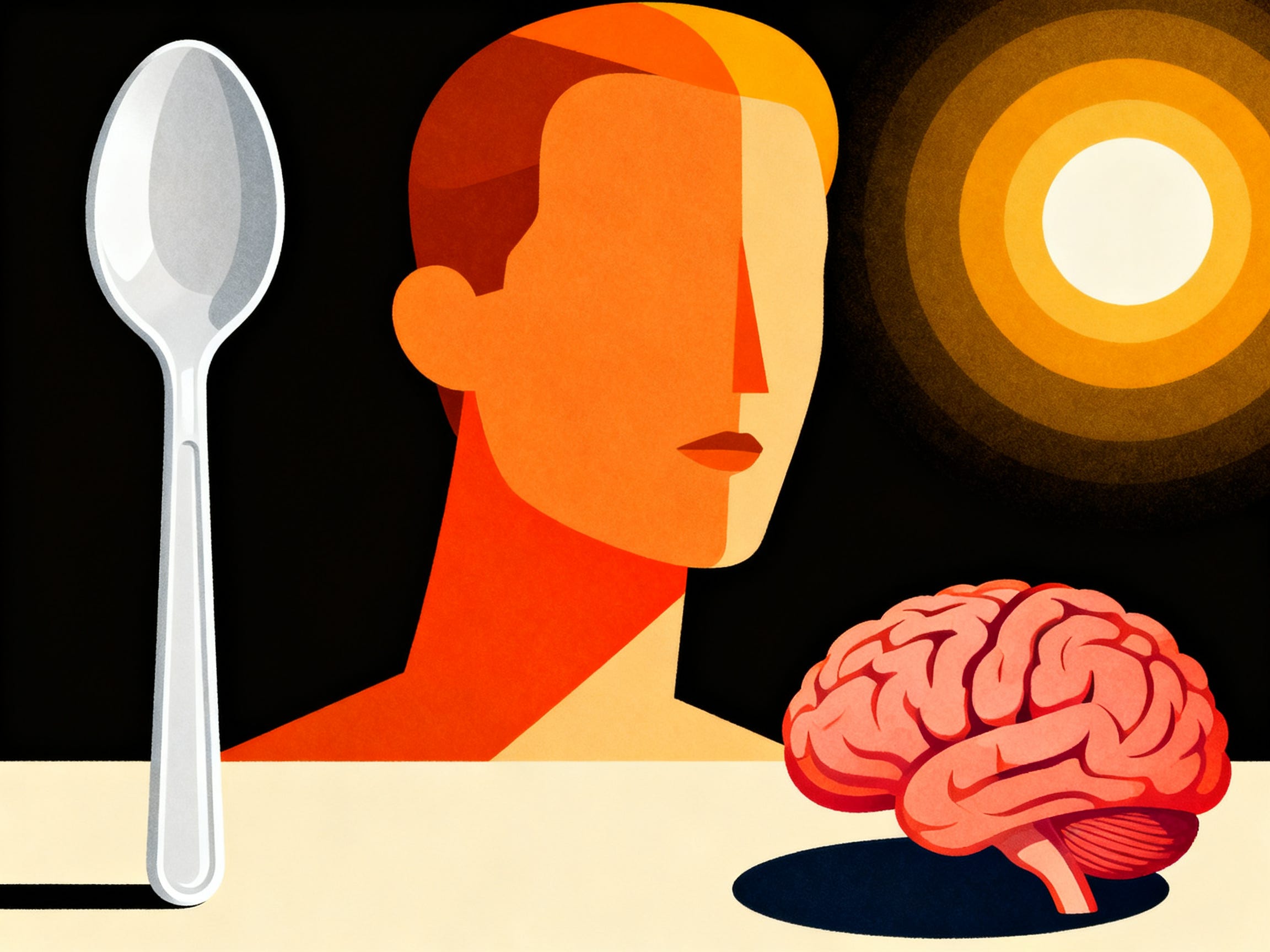
A colleague of his, the toxicologist Marcus Garcia, used a more memorable comparison. He told a journalist that the volume of plastic in the average brain was “approximately equivalent to a plastic spoon.”
A spoon. Inside the skull. Lodged in the soft, vulnerable tissue that you are using, right now, to read this sentence.
I want to sit with that.
I have read a great many alarming things in the course of writing these letters. I have written about copper deficits, phosphorus depletion, the energy cliff, the death of soil. I am, I think, somewhat hardened. But this measurement broke something in me that I had not realized was still intact — the assumption that the boundary between the human body and the industrial world was, in the end, holding.
It is not holding. It has not been holding for a long time. We just did not have the instruments, until very recently, to know.
This letter is about what it means.
I. The Borders That Aren’t There
Let me start with a small piece of physiology that you may remember from school. The brain is protected by something called the blood-brain barrier — a tight mesh of endothelial cells, lining the capillaries of the cerebral vasculature, designed to keep most things in the bloodstream out of neural tissue. The barrier evolved across hundreds of millions of years. Its job is to let oxygen and glucose through, while keeping toxins, pathogens, and large molecules out. It is one of the most rigorously selective filters in any organ system. Pharmaceutical companies have spent literal billions trying to design drugs that can cross it.
Plastic crosses it without effort.
Not whole plastic, of course. Polyethylene bottles do not float through your skull. The substances Campen detected are micro- and nanoplastic particles — fragments measured in nanometers, breakdown products of the larger plastic objects that have been entering the environment, in growing quantities, since roughly 1955. Below a certain size — the consensus is somewhere around 100 nanometers — plastic particles behave more like gases than like solids. They penetrate. They embed. They cross.
The same is true of the placenta. The human placenta is, biologically speaking, one of the most carefully constructed semipermeable membranes in nature. It is the thing that allows a mother to feed and protect a fetus while keeping their two immune systems from destroying each other. In 2021, an Italian researcher named Antonio Ragusa, working with the Hospital San Giovanni Calibita in Rome, published the first paper documenting microplastics in human placentas. He had to invent half of his own protocol to do it; standard methods were not designed for substances this small. He found microplastic in four out of six placentas examined, on both the maternal and fetal sides. Subsequent work has established that placentas from preterm births contain roughly twice the plastic load of placentas delivered at term. Whether that is because plastic is contributing to early labor, or because shorter gestations simply result in less plastic per unit time being filtered out, has not yet been settled. Both possibilities are worth a sleepless night.
Then there are the testes. The blood-testis barrier, like the blood-brain barrier, is a rigorous biological filter, and its job — to protect developing sperm from circulating immune cells and toxins — is, evolutionarily speaking, fairly important to the project of being a species. In 2024, another group at UNM, this one led by Xiaozhong Yu, examined twenty-three pairs of human testicular tissue. They found microplastics in every single one. Mean concentration: 329 micrograms per gram. That is roughly three times higher than the average concentration found in canine testes, and substantially higher than the concentration in placental tissue.
Then breast milk (Italian study, 2022, found microplastic in 26 of 34 samples). Then heart muscle (Chinese study, 2023, plastic detected in atrial appendages of 8 of 15 patients undergoing cardiac surgery). Then bone marrow. Then blood — Heather Leslie at Vrije Universiteit Amsterdam published the first definitive demonstration of plastic in human blood in 2022; she found particles in seventeen of twenty-two anonymous donors.
The pattern that emerges, across all these studies, is unmistakable. There is no biological barrier we have so far thought to test that holds. The blood-brain barrier is leaking. The blood-testis barrier is leaking. The placenta is leaking. The walls of the cardiovascular system are leaking. The lungs were always going to be exposed, because that is what lungs are for. We knew this. What we did not yet know — what we are only now learning — is that everything else is exposed too.
II. The Researcher Who Did Not Want to Be Right
I have been reading Matthew Campen’s interviews compulsively. There is a particular tone that scientists adopt when their data has gotten away from them — when the result is bigger and stranger than they wanted, when the implications have moved from their lab into territory they would rather not be standing in. Campen has that tone.
In a long conversation with the New York Times Magazine last June, he described what it had been like to run the first version of the brain analysis. The technique he and his team developed — burning the tissue at 600 degrees Celsius and analyzing the gases released — was, he said, “ugly but unambiguous.” The first sample produced so much plastic signal that he assumed the equipment was contaminated. He cleaned it, recalibrated, and ran the sample again. Same result. He swapped instruments with another lab. Same result. He brought in independent reviewers. Same result.
“I kept hoping someone would find an error,” he told the reporter. “I would have been relieved. We are not relieved.”
I find this honest in a way that public-facing science rarely is. Most academic papers, even devastating ones, end with the language of hedging. “Further research is needed.” “These findings warrant additional investigation.” Campen and his team produced a paper that says, in scrupulously neutral language, that the average human brain in 2024 contained measurable plastic at concentrations that would, in any other organ in any other context, set off alarms in every public health agency on Earth. And then he gave an interview in which he sounded, to my ear, like a man who was waking up at three in the morning.
The plastic, he told another interviewer, accumulates preferentially in the myelin — the lipid sheath that wraps around neurons and allows them to transmit signals at usable speeds. This is not surprising, structurally. Microplastic particles are oleophilic; they bind to fats. Myelin is mostly fat. So the body, doing what bodies do, has been quietly storing plastic in the part of the brain where neural signal speed is determined.
What does that do? We do not know. The studies have not been done. The studies, in some cases, cannot be done. You cannot ethically run a randomized controlled trial in which you feed plastic to people. You can only look at what is already happening, and try to make sense of it after the fact.
Animal studies, for what they are worth, are not encouraging. Mice exposed to nanoplastics show measurable cognitive decline, behavioral changes, reduced spatial memory. Zebrafish develop neurological abnormalities. Fruit flies — admittedly far from human — show altered patterns of activity and reduced lifespan when raised on plastic-laden food. The dose-response curves are not what you would call subtle.
What we have, then, is a global natural experiment, with the population of the entire planet enrolled, no consent forms, no control group, and an outcome that will only become clear in the brains of the next several generations.
III. The Pathways
When I tell people about the brain finding, the question I get most often is: how is it getting in there? They are imagining, I think, some specific moment of exposure. A factory smokestack. A landfill. A polluted river. They want a villain.
The reality is more dispersed and, in some ways, harder to bear. The plastic is getting in through every available channel, simultaneously, and at a scale that has rendered the concept of “exposure” almost meaningless.
Inhalation, it turns out, is probably the dominant route. The air in any modern interior contains microplastic at concentrations that a 1970s industrial hygienist would have considered impossible. A 2024 study by Stanford’s Jennifer Brandon found that carpets in office buildings shed an average of 4,000 microfibers per square meter per day. Synthetic clothing — polyester, nylon, acrylic — sheds millions of microfibers per garment per wash, and continues shedding through wear. The dust on your bookshelf is, by mass, somewhere between five and twenty percent plastic, depending on the room.
Then there is water. In January 2024, a team at Columbia led by Naixin Qian published a paper in PNAS using a new laser-based technique to count nanoparticles in commercially bottled water. The number they came up with — averaged across major brands — was roughly 240,000 nanoplastic particles per liter. Roughly 90% of those particles were nanoplastic, smaller than the threshold of previous detection methods. This means that virtually every prior estimate of human plastic ingestion was, in retrospect, off by an order of magnitude or more.
Tea bags. A 2019 McGill study found that a single nylon-mesh teabag, steeped at brewing temperature, releases approximately 11.6 billion microplastic and 3.1 billion nanoplastic particles into the cup. Eleven point six billion. Per cup. In what we have been encouraged to think of as a wellness ritual.
Tires. As of 2025, tire wear is the single largest contributor of microplastics to the world’s oceans, surpassing all other sources combined. Every vehicle on every road sheds a fine dust of synthetic rubber and reinforcing polymer compounds. That dust enters the air, the storm drains, the rivers, the food web.
Cosmetics. Personal care products. The polyethylene microbeads in exfoliants, banned in some countries beginning around 2016, were the visible portion of a far larger problem. Many sunscreens, foundations, and moisturizers continue to contain plastic particles or polymer carriers. The ingredient lists, for those who can decode them, are an inventory.
Food. Salt. Beer. Honey. Apples. The closer you look, the more places the plastic shows up. There is no diet you can construct, in 2026, that does not contain plastic. There is no air you can breathe, except in the most isolated conditions, that does not contain plastic. There is no opt-out.
This is what I find most disorienting about the situation. The civilizational traps I have been writing about — Haber-Bosch, the energy cliff, the digital web — were at least, in some abstract sense, outside of us. You could go for a walk in the woods and feel, briefly, that you had stepped out of the system. With plastic, there is no outside. The system has come into the body. It has come into the cells. It is, by mass, a measurable component of the very tissue that is doing the noticing.
IV. The Word I Have Been Looking For
I have been searching, since I first read Campen’s paper, for the right word for what is happening. Pollution is wrong. Pollution implies a boundary that has been breached, a clean inside and a contaminated outside, a state that could in principle be reversed by removing the contaminant. Contamination has the same problem. Bioaccumulation is technically correct but emotionally inert; it sounds like something happening to someone else’s species in someone else’s biome.
The word I have settled on is incorporation. Not in the corporate sense, but in the older sense — to take into the body, to make part of one’s substance. Incorporare, from Latin: to embody.
The plastic is not polluting us. It is being incorporated. It is becoming part of the substance of our bodies. The boundary between human flesh and industrial product, which we had assumed was a hard one, turns out to have been a soft and porous one all along, and we did not know, because we did not have instruments fine enough to see across it.
This is not a small change in framing. Pollution is a problem that can be solved by cleaning up. Incorporation is a problem that can only be addressed by changing what we put into the world in the first place — because once it is in us, it is in us. The half-life of polyethylene microparticles in human tissue is unknown. There are no robust studies. The default scientific assumption, in the absence of data, is that for the smallest and most stable polymers, the half-life is effectively indefinite on human timescales.
What we have put into our environment, we have put into ourselves. What we have put into ourselves, we will be passing on. The placenta data tells us this directly: every pregnant woman, in 2026, is delivering microplastic to her fetus along with oxygen and nutrients. Every child born this year will start life with measurable industrial polymer in their tissues. They will accumulate more across their lifespan. They, in turn, will pass it on.
The continuity of the species, at the cellular level, is now a continuity that includes plastic.
I want to be precise about this because I think it is the part most people cannot quite take in. We are not a population that has been contaminated by an external pollutant. We are a population that has, at the molecular scale, mergedwith an industrial substrate. The merger has been happening for seventy years. It is now substantially complete. The work ahead is not to undo it — that may not be possible. The work ahead is to figure out what kind of species we have become, what kind of children we are now making, and whether the merger is compatible with the continuation of consciousness as we have known it.
V. The Civilizational Trap, Again
I have written before about civilizational traps — solutions to existential problems that create dependencies so deep they cannot be unwound without consequences as severe as the original problem. Haber-Bosch was the archetype: synthetic nitrogen fertilizer feeding four billion people, while simultaneously degrading the planet’s nitrogen cycle to the point of compromise. The trap is not in the solution. The trap is in the success of the solution.
Plastic is the seventh trap. Possibly the cleanest example of the pattern.
The original problem was real and deserves to be remembered. In the early twentieth century, the materials of civilization — wood, metal, ivory, rubber from rubber trees — were either becoming scarce or were intrinsically constrained by what the biosphere could produce. The first synthetic plastic, Bakelite, was patented in 1907 by Leo Baekeland, a Belgian-American chemist who saw, correctly, that the supply of natural shellac was inadequate to a rapidly electrifying civilization. Bakelite was, in its moment, miraculous. So was nylon when DuPont introduced it in 1935. So was polyethylene, polypropylene, PVC, polystyrene. Each new polymer solved a real problem and unlocked a real capability. Modern medicine — IV bags, blood storage, vaccine vials, sterile packaging, surgical tools, prosthetics — runs on plastic. So does most of the food preservation infrastructure that keeps cities fed. So does virtually every electronic device that exists.
The numbers, as always, matter. Global plastic production was approximately 2 million tonnes in 1950. By 2022 it had reached 400 million tonnes. The cumulative production of plastic since 1950 is somewhere on the order of 9 to 10 billion tonnes. Of that total, roughly 7 billion tonnes have already become waste. Of the waste, only about 9% has been recycled in any meaningful sense. Most of the rest is in landfills, in the environment, or — increasingly — in living bodies.
The dependency runs deep. We cannot stop. The hospitals cannot stop. The food system cannot stop. The semiconductor industry, which fabricates the chips that run everything else, cannot stop, because polymer-based photoresists are central to lithography. There is no scenario, in any realistic transition timeline, in which plastic production goes to zero in the next several decades.
But we cannot continue, either. The trajectory is exponential. Plastic in the environment is increasing. Plastic in the human brain is increasing — Campen’s team estimated the rate at roughly 50% in the eight years between 2016 and 2024. Plastic in the placenta is increasing. The endocrine disruption literature is increasing. The cancer correlations are starting to emerge. The fertility data, depending on whose meta-analysis you trust, is doing something between alarming and catastrophic.
So we have a substance we cannot stop producing, accumulating in places we cannot remove it from, with consequences we are only beginning to measure, and a global response system that is — it must be said — almost entirely absent.
This is the structure of every civilizational trap I have written about. The first ones — nitrogen, antibiotics, fossil fuels — at least had the courtesy to take their effects out into the environment. The plastic trap is closing inside us. The dependency is in the cells.
VI. The Silence
The strangest thing about the plastic story is the public silence that surrounds it.
I have been waiting, for two years now, for the moment when this finding goes mainstream — when the cable news segments start, when the politicians introduce bills, when the lawsuits begin in earnest, when the cultural discourse catches up to the science. It has not happened. There have been waves of coverage. The CNN piece on the spoon got traction in February 2025; the New York Times Magazine piece on Campen got traction in June. But the discussion has not stuck. It does not enter the rotation. It does not become the kind of background fact that everyone is, on some level, oriented around.
This is, I think, the most disturbing aspect of the entire situation, and the one most worth examining.
Why is there no alarm?
I have a few theories. None of them are flattering, to me or anyone else.
The first theory is saturation. We are already absorbing so much terrible news — climate, war, demographic collapse, financial fragility, AI displacement — that there is no remaining capacity for a story this big. The nervous system can only metabolize so much information about civilizational breach before it goes into a kind of protective numbing. The plastic-in-the-brain finding arrives at a moment when most people are already running a kind of perpetual triage on what they will allow themselves to feel, and a finding this consequential, with this little visible recourse, gets filtered out.
The second theory is that the finding is too intimate. Climate change happens to glaciers, to coastlines, to other people. Plastic in the brain happens inside the skull of the person reading the news. There is something almost agoraphobic about a fact this close. The reader cannot escape it, cannot turn off the television and walk away from it, cannot do anything that would meaningfully reduce their exposure in the short term. So they do not absorb it. They glance at the headline and turn the page.
The third theory is more uncomfortable. It is that we have, collectively, accepted plastic the way we accepted lead and tobacco and asbestos before it. Each of these substances took fifty to a hundred years from initial commercialization to the point at which their harms were widely acknowledged and meaningfully restricted. In each case, the lag was not because the data was unavailable — it was because the financial interests in continued use were enormous, and the burden of proof was placed, repeatedly, on those harmed rather than on those benefiting.
Plastic is on schedule. The data is becoming overwhelming. The major lawsuits — against polymer producers, against bottled water companies, against textile manufacturers — are beginning to be filed. By the late 2030s or 2040s, I expect we will see the equivalent of the tobacco master settlement, in which the petrochemical industry pays out tens of billions to fund treatment and cleanup. This is, in some sense, the optimistic scenario. It assumes the industry survives long enough to be sued, and it assumes the legal infrastructure remains intact long enough to enforce a settlement.
In the meantime, we wait. We continue to drink the bottled water, wear the synthetic clothing, breathe the carpet dust. Some of us — those who can afford to — switch to glass containers, cotton clothing, and HEPA air filters. The class dimension here, as with most environmental harms, is severe and worth naming. The very poor cannot insulate themselves from any of this. The merely middle-class can mitigate, perhaps, ten or twenty percent of their exposure. Even the wealthy cannot avoid the air. Plastic is the first environmental harm in human history that does not respect financial class. The rich and the poor, in 2026, have approximately the same amount of plastic in their brains.
There is a strange democracy to this.
VII. The Microbiome, Briefly
I want to pause to introduce a parallel finding, because the two together describe something that is not quite captured by either alone.
In 2023, a team at Stanford led by Justin Sonnenburg published a paper in Cell on the gut microbiome of the Hadza hunter-gatherers of Tanzania. The Hadza are one of the last remaining populations on Earth living, more or less, in continuous practice of pre-agricultural lifeways. Their diet, their daily activity, their environmental microbial exposure — all of it approximates the conditions in which our species’ gut ecology evolved.
Sonnenburg’s team performed ultra-deep sequencing on 167 Hadza fecal samples and compared the results to similar samples from Nepalese subsistence farmers and Californian urbanites. The Hadza microbiomes contained, on average, 730 distinct microbial species. The Californian microbiomes contained 277. Roughly 124 species, present in essentially all hunter-gatherer guts examined, were entirely absent from industrialized populations.
Read that again. The internal ecosystem of an industrialized human contains less than half the species diversity of the internal ecosystem of a Hadza human. The species that are present are different. The functions are different. The genes are different — industrialized microbiomes are enriched in stress-response and inflammation-handling genes, suggesting a biome adapted to internal conditions of chronic damage.
So. The body is being filled with industrial polymer at the same time it is being emptied of evolved microbial diversity. The exterior ecology is collapsing at the same time the interior ecology is collapsing. We have been treating these as two separate stories, and they are not.
There is a name, in ecology, for this kind of double depletion: regime shift. A regime shift occurs when an ecosystem’s internal feedbacks reorganize so thoroughly that the system flips into a new attractor state — one with different species, different processes, different stable configurations. Once a system has shifted, returning to the prior state requires not just removing the original stressor, but actively reconstructing the conditions that supported the prior regime. This is much harder than prevention.
The human body, considered as an ecosystem, may be undergoing a regime shift. We do not have the diagnostic vocabulary yet to describe it. But the data, taken together, is what regime shift looks like at the early stages.
VIII. What Could Be Done
I do not want to leave you only with the diagnosis. The pieces I write are not designed to be terminal. There is, I think, a path through this — and like the other paths I have written about, it does not run through more complexity, more sophisticated remediation, or some technological fix that allows us to continue what we are doing more efficiently. It runs through redesign at the materials layer.
There are people building this. I want to name them, briefly, because they deserve naming.
Plantd Materials, based in North Carolina, is producing structural panels from giant reed (Arundo donax) — a fast-growing, carbon-negative biomass crop. The panels replace petrochemical-based building materials in residential construction. The substitution is direct, the supply chain is short, and the end-of-life disposal is compostable. I have been in correspondence with their founder, Nathan Silvernail, for the better part of a year. The technology works. The economics, with sufficient policy support, are competitive.
Ecovative, based in upstate New York, grows packaging materials and structural composites from mycelium — the vegetative network of fungi. A mycelium foam, grown from agricultural waste, can replace much of what polystyrene is currently used for, with comparable mechanical performance and a fraction of the environmental persistence.
Human Material Loop, founded by the Hungarian designer Zsofia Kollar, processes waste human hair into keratin fibers usable for textiles and insulation. The process requires no agricultural land, no synthetic input chemistry, and no fossil-derived feedstock. Hair is the most abundant unused renewable material in human civilization. Most of it, currently, goes to landfill.
Beyond materials, there are policy levers. The Global Plastics Treaty, currently in its fifth round of negotiations under UN auspices, is the closest thing to a binding international instrument. The current draft text is, by most accounts, weaker than the science demands. But it exists, and the framework, once established, can be tightened.
There are individual practices that reduce exposure. Glass and stainless steel containers. Air filters in the home. Synthetic-textile-free clothing where possible. Bottled water avoidance. Tea in loose leaf form. None of these eliminate the problem; they reduce the rate at which the problem accumulates in a single body. The collective effect of millions of households doing this is non-trivial.
But I want to be honest about the limits. Individual mitigation, in this case, is roughly equivalent to bailing a flooding boat with a teacup. The flood is larger than the bailing capacity. The only intervention that meaningfully alters the trajectory is the one that operates at the materials economy level — that says, with the force of policy and capital, that civilization must be rebuilt on substrates that compost, decompose, or remain inert outside of biological systems.
This is the same answer, in the end, as the one I have given for nitrogen, for energy, for forests. The civilizational design has to change. Not at the surface — at the substrate.
IX. The Private Reading
I want to close with something more personal, because the public conversation about this finding has had, so far, almost nothing personal in it, and I think the absence is part of why the discourse has not moved.
A few months ago, I was sitting in my kitchen drinking coffee from a mug I have owned for a decade. I was reading Campen’s paper, again, for the third or fourth time. My partner was at the counter, slicing fruit. My laptop was open. My phone was nearby. The window was open and the morning light was coming in through the curtains, which are made of polyester.
I noticed, as I sat there, that I could account for the plastic in almost everything I was looking at. The lining of my coffee cup, even though it was ceramic, had been wax-paper-sealed at one point. The slice of fruit my partner was eating was wrapped in plastic when it came home from the market. My laptop’s keyboard was polymer. My phone case was polymer. The curtains. The plastic case of the pen on the table. The packaging of the cereal in the cabinet behind me. The seal on the milk carton in the fridge. The wire insulation on every device in the room. The carpet. The paint. The dust on the shelf, which contained, by mass, somewhere between five and twenty percent plastic.
I was, in that moment, sitting in a chamber whose walls and contents and air were continuous with my own tissue. The line I had been carrying around in my head — outside the body, inside the body — was not really a line. The plastic on the table and the plastic in my brain were the same molecules, in different temporary locations. The one was on its way to becoming the other. The other had been the one not so long ago.
I held my coffee cup and tried to feel the temperature of the ceramic. I tried to feel the weight of it in my hand. I tried, for a moment, to remember what it had felt like to live in a world I imagined to be separate from me. To live in a body that I imagined to be separate from the world. I could not quite get back there. The boundary had dissolved a long time ago, and I had only just noticed.
This is the thing I keep coming back to. The plastic in the brain is not, ultimately, about plastic. It is about the kind of relationship we have with matter. We treated it as inert, indifferent, disposable. It refused to be inert. It refused to be indifferent. It refused, above all, to be disposable. It came back. It came in. It became us.
The ancient idea of an anima mundi — a world-soul — has always had its critics among the materialists, who have tended to read it as wishful thinking, as projection, as the kind of thing primitive people believed before they had thermometers. But the materialists may have been the ones who were wrong. Not because the world has a soul in the way humans have souls — that may or may not be true — but because the boundary they were drawing, between the world and the human, was not a real boundary. The matter of the world enters the human. The matter of the human is matter of the world. We have been in chemical communion the whole time, and we did not know.
The plastic is the cruelest version of this discovery. We made a substance that we thought would never come back, and the world has handed it back, in our brains, in our placentas, in our children. There is something in this that feels like a teaching. The materials we treat as if they were dead come back as part of us. The world we treat as substrate is not substrate. It moves. It enters. It becomes.
I do not know how to finish this letter. The pieces I have written before have ended on something close to a call to action — invest here, build this, change that. This one resists that ending, because the action required is so enormous and so far above any individual reader’s pay grade that prescribing it feels almost rude. The materials economy of an entire planet has to be rebuilt. The chemistry of every supply chain has to be reconsidered. The financial incentives that have made cheap polymer so irresistible to manufacturers have to be inverted.
What I can say is that we are the first generation in the history of the species whose neurons are insulated, in part, by industrial polymer. Whatever we think with, plastic now thinks alongside. Whatever consciousness is, it is now happening in tissue that contains, on average, a teaspoon of synthetic material that did not exist on this planet a hundred and twenty years ago.
This is, I think, what the philosophers used to call a hinge moment. The species has crossed a chemical threshold that it cannot uncross. What we are now is going to be different from what we were. The work, going forward, is to figure out what kind of mind, and what kind of civilization, can grow from a substrate that includes its own industrial waste, and to build for that, honestly, instead of pretending we can return to a body that no longer exists.
The spoon is in the brain. The brain is reading these words. The world that built the spoon is the same world the brain is part of. There is no outside. There never was.
What we do from here is the only question that matters.
Until next time,
M.
Further reading: Campen et al., “Bioaccumulation of microplastics in decedent human brains,” Nature Medicine, February 2025. Ragusa et al., “Plasticenta: First evidence of microplastics in human placenta,” Environment International, 2021. Yu et al., “Microplastic presence in dog and human testis,” Toxicological Sciences, 2024. Leslie et al., “Discovery and quantification of plastic particle pollution in human blood,” Environment International, 2022. Qian et al., “Rapid single-particle chemical imaging of nanoplastics by SRS microscopy,” PNAS, January 2024. Carmody et al., “Ultra-deep sequencing of Hadza hunter-gatherers recovers vanishing gut microbes,” Cell, June 2023. Levine et al., “Temporal trends in sperm count: a systematic review and meta-regression analysis of samples collected globally in the 20th and 21st centuries,” Human Reproduction Update, November 2022. UN Environment Programme, “Global Plastics Outlook,” 2024.
If this letter resonated, share it with someone who works in materials science, public health, or product design. The conversation needs to move from the lab into the rooms where decisions are made, and the rooms where decisions are made are full of people who do not yet know what is in their brains.
Great work on this, thank you.
I can think of another reason this doesn’t get talked about more: the plastic spoon in our brains has not just incorporated itself, it has colonized and activated a self-preservation mode. Good fodder for a sci-fi novel.
Someone told me yesterday they only drink bottles water because they don't trust other water. I think your article would break their brains, that is, if they could even bring themselves to read it! I think your #3 theory is probably closest. When I stop to think about how ubiquitous plastic is in our lives, doing something about it feels completely unrealistic. Pretty awful.
Hi Malte
I have been aware of this for a long time now and gone through similar changes in how I felt positioned in the world and the whole inside/outside boundary. I came across a bunch of feminist discourse about female embodiment and how it is much more attuned to living with foreign stuff inside it. Including of course men (briefly) and children. The texts provided interesting elaborations on the theme. "Sponge orientation", was my personal coinage.
On the brain plastic and barrier issues I recently read an article claiming that there is in fact a problem with measuring methodology relating to the oliads and the plastics and that incineration of cholesterol (myelin) produces the same kinds of vapors as plastic and that the mixed up vapor cannot distinguish if it is plastic or a false signal from the nerve signal insulation (myelin). This still does nothing to falsify the studies that show pthalates can be measured in blood after holding a shopping receipt between the fingers for a short time (I think it was a minute or so) due to the coating on the heat printed receipt at the cashier.
And on the human biome issue... And rising levels of bowel cancer in young people... The probiotic food intake and highest possible diversity of plants, nuts etc organic and perhaps even unwashed, fresh, picked by oneself might be worth considering to get as much gut diversity inside ourselves as possible...on the input side.
On the output side of the digestive tract, perhaps we will all have to act like pornstars and clean outside and in, to adapt and survive. To turbocharge throughput and aid absorbtion of nutrients from produce, which is itself providing us with declining nutrition values due to depletion of soil biome health. Or something...